
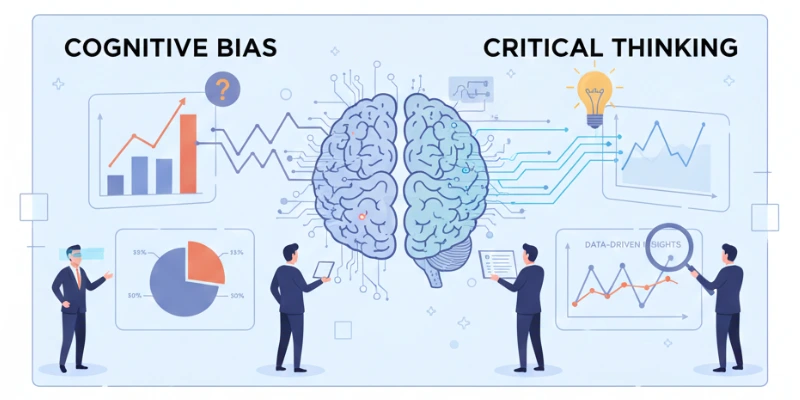
Cognitive bias is a natural part of how humans think. It influences judgment and decision making even when we rely on data. In data analytics these biases can quietly distort interpretation and lead to conclusions that do not reflect reality. Understanding how cognitive bias works is the first step toward becoming a more objective analyst. If you want to strengthen your skills and learn practical ways to minimize bias, consider enrolling in a Data Analyst Course in Mumbai at FITA Academy and gain hands-on experience in real-world analytics.
What is Cognitive Bias in Data Interpretation
Cognitive bias refers to mental shortcuts that shape how people see information. Although these shortcuts assist us in making rapid decisions, they can lead to blind spots in our data analysis. Analysts may focus on details that confirm their beliefs or overlook patterns that contradict expectations. When this happens data loses its accuracy and insights lose their reliability.
Confirmation Bias and Its Impact
One of the most common biases in analytics is confirmation bias. This occurs when individuals look for data that supports their assumptions. For example an analyst who believes a marketing campaign is successful might only examine numbers that highlight positive engagement. They may ignore data that shows weak performance in certain segments. When confirmation bias takes over the final conclusion no longer represents the full picture.
To avoid this bias analysts should review data from multiple perspectives and question initial expectations. Approaching each data point with curiosity rather than certainty helps maintain objectivity. For those looking to deepen their skills, joining a Data Analytics Course in Kolkata can provide structured learning and practical techniques to interpret data more accurately.
Anchoring Bias and Early Impressions
Anchoring bias occurs when the initial information serves as a mental benchmark. In analytics this often occurs when analysts receive an early metric or forecast. They may use that initial number to guide every later interpretation. Even if new data shows a different trend the first number continues to influence the conclusion.
A strong way to reduce anchoring is to delay forming a judgment until all relevant data has been reviewed. Analysts can also compare multiple baseline metrics instead of relying on a single starting point.
Availability Bias and Overweighting Recent Events
Availability bias appears when recent or memorable events carry more weight than they should. If a company recently experienced a surge in sales analysts may assume the trend will continue. They might overlook long-term patterns that paint a different story. To develop skills for recognizing and correcting such biases, professionals can consider enrolling in a Data Analytics Course in Delhi, which offers practical strategies for analyzing data objectively.
To address availability bias it helps to analyze data across a longer period. When analysts look at historical trends they gain a clearer understanding of the full context.
Groupthink and the Pressure to Agree
Groupthink occurs when teams lean toward agreement instead of critical thinking. In analytics teams may accept insights quickly because everyone wants to avoid conflict. This leads to conclusions that are not challenged or validated.
A good practice is to encourage open discussion within analytics teams. Diverse viewpoints help reveal errors that a single perspective may miss.
How Analysts Can Reduce Bias
Analysts can limit bias by adopting structured processes. Useful techniques include reviewing data with predefined criteria validating results with multiple sources and inviting peer review. Clear documentation also helps because it forces analysts to explain how they interpreted the data.
Education and Skill Development
Aspiring data analysts can enhance their skills through formal education. Some students even explore options like B Schools in Chennai to gain exposure to business concepts and data-driven decision-making. Developing strong analytical thinking helps in recognizing and reducing cognitive biases in real-world scenarios.
Cognitive bias affects data interpretation more often than many people realize. When analysts understand these biases they strengthen the accuracy of their insights. By applying critical thinking and consistent evaluation methods data remains trustworthy and decisions become more effective.
Also check: An Introduction to Data Mining and Its Role in Analytics